Wednesday, September 24, 2014

Sketching Living Walls in Tanzania by Alison Nicholls


Sketching Living Walls in Tanzania by Alison Nicholls
When I sketch in Africa, I feel I’m as close to the people and wildlife as I possibly can be. Every sketch comes alive when I look back at it, not only because it is a piece of art in its own right, but because it is also a personal memory. You may not see the chickens scrabbling around behind me or hear the muffled sound of a distant cowbell, but I remember all of this when I look at a sketch. Knowing how many sketchbooks to bring on a trip is always difficult. Some days I may only manage 1 sketch (then I wonder why I brought so many) and other days I create 6 sketches in an hour (then I wonder why I didn’t bring more).
These sketches are invaluable to me when I get back to the studio. I rarely recreate a watercolor field sketch as an acrylic on canvas back in the studio, but the gestures I capture in my sketchbook will often spark an idea for a full studio painting. Sometimes it is a question, a comment or a conservation issue that prompts my next painting idea. The African People & Wildlife Fund’s popular and highly successful Living Wall program cried out to be painted. But how exactly? I struggled with the composition for this piece and painted it 4 times before I was happy with the results!

The full explanation of the painting is shown below but to see it firsthand and to hear about more of my conservation-themed paintings, please join me at The Explorers Club in New York City on September 29 for my lecture
African Conservation through the Eyesof an Artist. Alternatively you can Live Stream the Lecture, starting at 7pm EST.

 
Living Walls
Acrylic 29x29” by Alison Nicholls, US$4800

Human-wildlife conflict is increasing across the globe as the human population expands and people compete with wildlife for land, food and water. People usually prevail and wildlife is squeezed into ever smaller ‘islands’ of protected land, but there are places where these trends are being reversed, where people and wildlife share natural resources for their mutual benefit. On the Maasai Steppe in northern Tanzania, the African People & Wildlife Fund consulted with local communities and created Living Wall bomas, fortified corrals, in which families keep their livestock overnight.

Traditional bomas are built of piles of thorny acacia brush which must be replenished every few months, often leading to deforestation in the area. Even then, predators can get into a poorly constructed boma, or their presence can panic livestock who break out into the bush, where they are more vulnerable to attack. In the past, people might retaliate against predators by tracking and spearing the animal responsible for killing livestock, but today livestock carcasses can be laced with lethal agricultural poisons which kill any animal, bird or insect that feeds from the carcass. For this reason, predator numbers have been plummeting (along with those of vital scavengers like vultures). If livestock can be kept safe in bomas at night, when most attacks occur, then people will have no reason to retaliate against predators and their numbers can recover. 

A Living Wall boma differs from a traditional boma in several ways. It is made of chain-link fencing held up by living fence-posts cut from native Commiphora trees. The trees are not killed by the cutting of thick branches for fence-posts, and the chain-link wire ensures that the livestock cannot break out of the boma. My Living Walls painting shows a cow, a goat, a sheep, a donkey, a spotted hyena, a leopard and a lion, linked by the crossed lines of the chain-link wire. Some of the lines are shaped into the distinctive branches of the Commiphora, with their trifoliate leaves (leaves with 3 leaflets). Vegetation of all types grows up and around a Living Wall, creating an impenetrable barrier so that the Living Wall cannot be breached and livestock and predators cannot see each other, which is why the eyes of each animal in the painting are covered with Commiphora leaves. The fact that the painting shows livestock and predators as being physically close and linked together by the Living Wall, mirrors the situation on the Maasai Steppe, where they share the same land and the future of both are interlinked.

400 Living Walls are now in operation on the Maasai Steppe, protecting 75,000 head of livestock nightly. The walls are in great demand and no livestock protected by a living wall have been killed since the program started in 2008. Living Walls are installed in areas where livestock depredation is high, so the installation of just a few Living Walls can lead to a drastic reduction in attacks on livestock. Local monitoring shows predator attacks have dropped precipitously, as have retaliatory killings of predators by livestock owners. Living Walls are changing attitudes to predators and they allow the Maasai to continue to live with lions, an animal of vital cultural importance.
The original acrylic painting of Living Walls is available for sale, priced at US$4800. If it is sold privately I will donate 40% of the sale price to APW. If it sells during an exhibition where the venue collects a commission (usually between 10-40%), APW will still receive a minimum of 10%. Limited edition giclées are also available with a 20% donation to APW from the sale of each piece.

To see more of Alison’s work please visit her website:
www.ArtInspiredbyAfrica.com

Thursday, September 18, 2014

Into the Arctic, Cory Trépanier


The Canadian Arctic... it’s a land of extremes and one of the last wild regions on the face  of our planet.  Seldom traveled, it’s been painted even less.


But for over a decade, Canadian artist Cory Trépanier has been doing just that: painting some of the Arctic’s furthest reaches.
Now, David J. Wagner L.L.C. is pleased to present Into The Arctic, a new and rare traveling museum exhibition of over fifty of Trépanier’s powerful paintings, a visual time capsule of some of our planet’s most spectacular, yet fragile landscapes.
During three expeditions to the far corners of the Arctic, Trépanier immersed himself into the landscape, hauling heavy backpacks loaded with camping, painting and filming gear.


He traveled with Inuit.
Walked in tracks of past explorers. 
Confronting raging storms, ravenous hordes of mosquitoes, and near exhaustion.
Faced close encounters with predators.
And experienced remoteness past the edge of civilization.
All so he could experience the land first hand, and find raw inspiration for his new canvases.

Click here for video about the exhibition
 
And find inspiration he did. Not only for more than 50 paintings, but also for one major centrepiece: his 15 foot wide Great Glacier, one of the largest landscape paintings ever from the Canadian north.
Museums around the globe now have the opportunity to share the majesty of the Arctic with their patrons through this extraordinary exhibition.
Opening in 2017, during Canada’s 150th anniversary, a limited number of museums will share the wonder and awe of the north before paintings are returned to collectors. 


Visit   http://davidjwagnerllc.com/exhibitions.html and scroll down to INTO THE ARCTIC, Cory Trépanier to find out more.
. . . or play the exhibition promotional video here: http://www.intothearctic.com/exhibitiontour.html
 

Saturday, September 13, 2014

環境インパクト 移動展覧会


 環境インパクト
移動展覧会
プロデュース:デビッド·J·ワグナー・LLC

「環境インパクト」は、デビッド·J·ワグナー・LLCがプロデュースする移動展覧会です。特定の地域や地球全体規模の環境問題にフォーカスする主要な現代アーティストの作品を、取り上げ紹介し皆さんとの共有を目指します。また進行中の環境問題は、人間の作為や不作為・積極的行動や消極的黙認の結果ですが、展覧会はまた環境問題への国民の意識と関心の高まりを表象しています。芸術では一般に、最良状態の自然を輝かしい存在として描くのが伝統的でした。ところが移動展覧会「環境インパクト」が展示する75の作品(絵画・写真・版画・インスタレーション・彫刻等)は、伝統的芸術から距離を置いています。それは資源開発・大量生産大量消費の影響から、大規模な原油流出事故・原子力エネルギーの危険性・干ばつや飲用水資源枯渇・地球温暖化その他の、最近の人類や他の地球上の生命の存亡に影響が懸念される多くの事象を取り上げた作品ばかりです。


移動展覧会「環境インパクト」を実現するため、キュレーター/ツアーディレクターであるデビッド·ワグナーは広範な分野から、その作風から環境問題との関連が認められ、かつ20世紀の最後の四半期に芸術的注目を集めたアーティストを糾合しました。

初期の参加者は展覧会に招請した経験のある作家達、カナダの画家ロバート·ベイトマンや彫刻家レオ·オズボーンから始まりました。ケント·ウルバーグの「プリンス·ウィリアム湾のためのレクイエム」などは、展覧会の趣旨を象徴する作品と言えます。今世紀最悪の生態系に対する人災であった、アラスカのエクソン·バルディーズ号原油流出事故の被害に思いを寄せた作品です。


オズボーンの彫刻「まだ聞いていない」も同一タイトルの詩に基づいた作品で、2010年4月20日ディープウォーターホライゾンでのオイルリグ爆発事故・その後のメキシコ湾での原油流出に向けられた、拭い去れない苛立ち・不満をテーマとした作品です。

ロバート·ベイトマンの「カルマナー·コントラスト」も、太平洋岸北西部で原生林が減少している事への危惧を、ポストモダン風に原生林と皆伐林画像を二段に分けて対比することにより描いた作品です。ベイトマンが1989年発表した「カルマナー·コントラスト」は「環境シリーズ」の第一作でした。1989年ブリティッシュ·コロンビア州バンクーバー島に集まったアーティスト達の、原生林であったカルマナーの森が皆伐された実態を文書化するための集団的な努力の中で生まれました。彼らは自分達の仕事を公開する事でアートを通して、事態の深刻さを訴え環境意識を高める事でこの傾向に抵抗しようと団結しました。移動展覧会「環境インパクト」にはデビッド·ワグナーが過去に紹介したアーティストの中から、ガラス彫刻家でGMO(遺伝子組み換え生物)の影響をテーマにしたミック·メイラーン、イスラエルの芸術家で終末論的タッチで危険にさらされた原子力発電所を描いたウォルター·ファーガソンイスラエル、絵画「道端の謎めいた鳥の死骸」を1980年代半ばに発表したミシガン州のアーティスト、リック·パが出展しています。


展示会も回を重ねワグナーの考え方も発展して、彼自ら自身の環境芸術に関する知見を見直しました。そして彼は成長したばかりでなく、未知のアーティスト達によるエキサイティングな作品にも出会ったのでした。日本の彫刻家さやか梶田ガンツの、身辺で集めたオブジェクトから制作した彼女の作品は堂々として輝いています。チェスター·アーノルド、クリス·ドイル、スコット·グリーン、そしてジュリー·ヘファーナンなど、サンフランシスコのキャサリン·クラーク·ギャラリーに代表される芸術家達の素晴らしい作品とも出会いました。他にも大勢の芸術家が同様に、有毒廃棄物問題から北極における地球温暖化の影響・大気や水の汚染・最近のミツバチの大群失踪・制御不能の山火事・在来種を駆逐する生息地での都市開発・野生生物の違法取引など幅広く取り上げて活動しています。数人の氏名をご紹介します。また全範囲に渡って多くの写真が展示されています。これはエドワード·ブルティンスク、ロバート·ドーソン、ピーター·ゴーイン、リチャード·ミズラック、ダイアナ·サンチェス、そしてマーティン·スチュピチなどの主要な写真家による写真の迫力や幅と奥深さに、キュレーター/ツアーディレクターのデビッド·J·ワグナーが感銘し訴求力に着目して展示したものです。

出展全アーティストは、次のとおりです。
出品作家
姓によってアルファベット順

ノルド、チェスタ、ソノマ、カリフォルニア州
ベイトマン、ロバート、フルフォード·ハーバー、 ブリティッシュコロンビア、カナダ
バーティンスキー、エドワード、トロント、オンタリオ、カナダ
チャペル、サンフランシスコ、カリフォルニア州
ドーソン、ロバート、サンフランシスコ、カリフォルニア州
デレイリス、ルチア、ウォータータウン、マサチューセッツ州
ドイル、クリス、ブルックリン、​​ニューヨーク州
ファーガソン、ウォルター·W 、ベイト、イスラエル
フリーダ、ブリット、バートン、ワシントン州
ガンツ、さやか 梶田、横浜(現米国 インディアナ州
ゴーイン、ピーター、リノ、ネバダ州
グリーン、スコット、ベルナリージョ、ニューメキシコ州
ハッケン、カレン、ポートタウンゼンド、ワシントン州
ハーヴェイ、ガイ、グランドケイマン、 イギリス領ケイマン諸島
ヘッファーナン、ジュリー、ブルックリン、​​ニューヨーク州
ヘルサプル、メアリー、セドナ、アリゾナ州
ジョンソン、コール、デポジット、ニューヨーク州
キングスウッド、ロン、スパルタ、オンタリオ、カナダ
メイラーン 、マイケル(ミック) 、ピケット、ウィスコンシン州
ミズラック、リチャード、バークレー、カリフォルニア州
オズボーン、レオ、アナコーテス、ワシントン州
パス、リック、ラピア、ミシガン州
ロバートソン、デレク、 バルメリノ、ファイフ 、スコットランド
サンチェス、ダイアナ、ボゴタ、コロンビア(現米国)
サントラ、キャロル、ケネバンク、 メイン州
ステュピチ 、マーティン、アルバカーキ、ニューメキシコ州
ウルベルグ 、ケント、コーパスクリスティ、テキサス州
ウォルター、バート、ウェストミンスター、メリーランド州
ウルフ、スーズ、シアトル、ワシントン州
(このリストは変更される可能性があります。 )

注:リストは変更やアーティストが追加される可能性があります。

2013年に世界一海抜が低く海面上昇に最も脆弱であると言われている国モルディブに旅したアーティスト3人組(ザリアフォアマン・リサLebofsky・ドリューデニー)による作品の実物が、展覧会に出展される予定です。

その他参加予定のアーティストはhttp://davidjwagnerllc.com/exhibitions.html環境インパクト移動展覧会」デビッド·J·ワグナー・LLC制作で確認してください。伝統的なアメリカ野生動物アーティストでキュレーター/ツアーディレクターでもあるデビッド·J·ワグナーによれば、当サイトは環境問題に関して最良の入門参考書です。

Saturday, August 30, 2014

America's Parks II

A special encore edition of AMERICA'S PARKS II will be displayed from December 19, 2015 - April 2, 2016 at the St. George Art Museum near the entrance to Zion National Park in Utah. 

The exhibition will complete is initial tour at The Arizona-Sonora Desert Museum Art Institute Ironwood Gallery, Tucson, AZ this coming Fall from September 13 - October 26, 2014, following display at The Ella Carothers Dunnegan Gallery of Art in Missouri, and The Wildlife Experience, in Denver.  The organizers of the exhibition are particularly pleased to be able to add to the itinerary, the St. George Art Museum.

Works included in the AMERICA’S PARKS II exhibition were selected from a competition open to all artists, the purpose of which is to recognize and promote excellence in original artworks depicting any park (national, state, provincial, county, city, or private) in Canada, Mexico and The United States, with an emphasis on parks in Northwestern Mexico, particularly in Sonora, and states in Southwestern U.S. including (in alphabetical order) Arizona, California, Colorado, New Mexico, Nevada, Oklahoma, Texas, Utah; and States in Northwestern Mexico. Selections were made by a professional jury consisting of:             Pam Dean Cable, Executive Director, Susan Kathleen Black Foundation             M. Stephen Doherty, Editor, PleinAir™ Magazine             Todd Wilkinson, Managing Editor, Wildlife Art Journal

Jurors selected an impressive array of 120 flatworks and sculpture for AMERICA'S PARKS II, an international competition and exhibition, the purpose of which is to recognize and promote excellence in original art depicting parks in North America.  New for AMERICA'S PARKS II is the eligibility of sculpture.  

Scott, Sandy
"Nesting Heron"
Grand Canyon National Park
Honorable Mention


Clayton, Pat
"Canyon Glow"
Grand Canyon National Park
Honorable Mention


Solberg, Morten E.
"Desert Bighorn Sheep"
Anza Borrego Desert State Park
The Priscilla V. and Michael C. Baldwin Foundation      Sonoran Desert Art Award

Juried artworks appear on-line at: http://davidjwagnerllc.com/competitions.html.  Artworks which appear in bold below are included in the initial AMERICA'S PARKS II traveling museum exhibition.  The exhibition tour itinerary appears below.

AMERICA'S PARKS is produced by David J. Wagner, L.L.C.  The company's President proposed the very first tour of the ARTS FOR THE PARKS exhibition, served as a Juror for that exhibit, managed the ARTS FOR THE PARKS tour for its first five years (1988–93), and served on the Advisory Board of its parent organization, the National Park Art Academy.

Friday, August 1, 2014

Scratching for Crocodiles 

"New Guinea Crocodile" 8x10 scratchboard

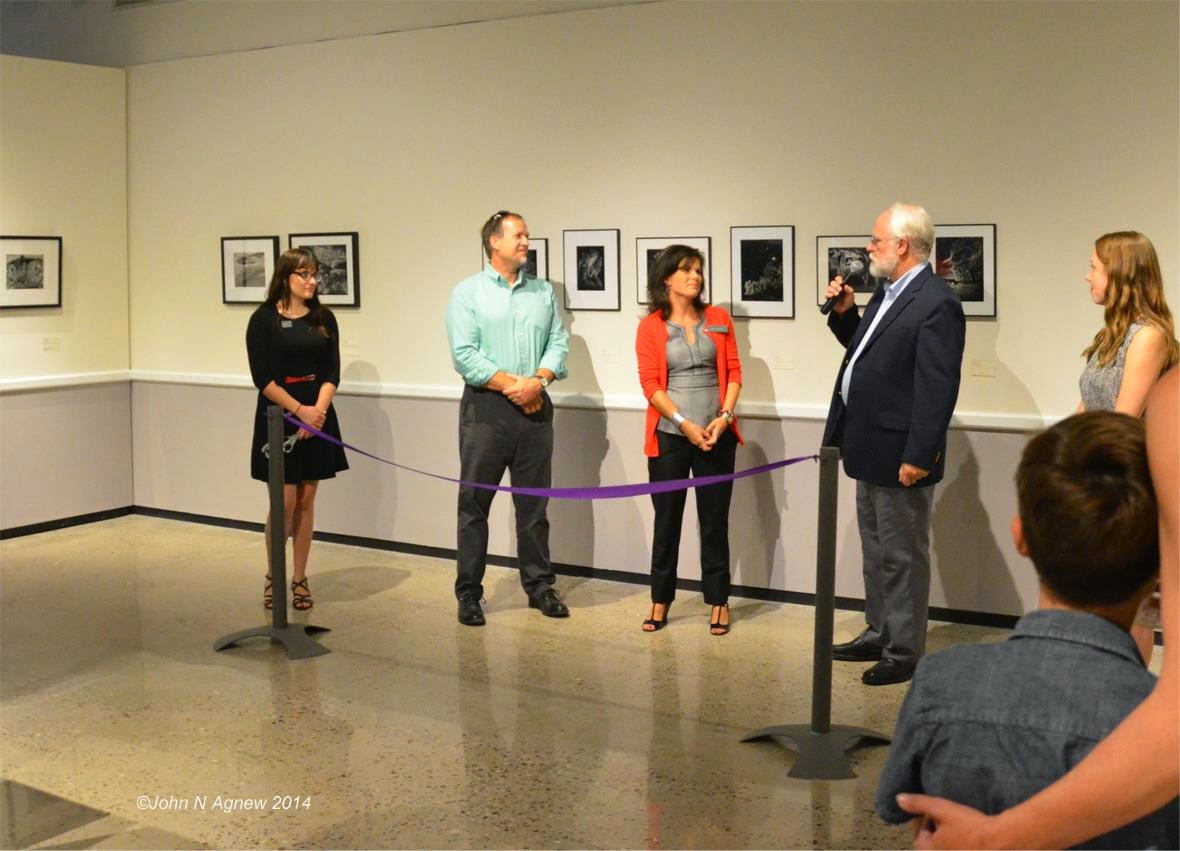
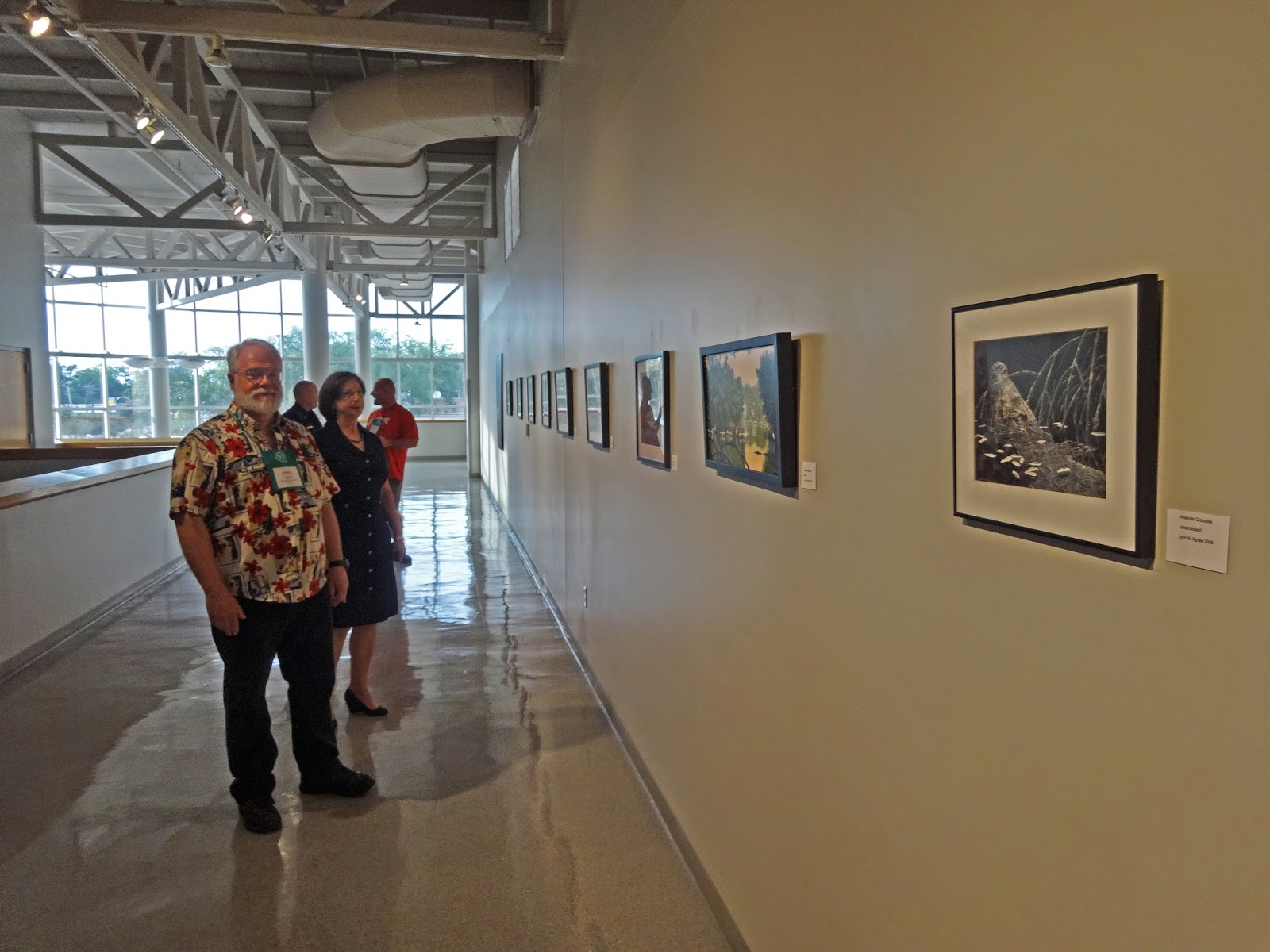
On July 19 of 2014, my Crocodile Scratchboards exhibit opened its first venue at the Arizona-Sonora Desert Museum.  A traveling exhibit produced and promoted by David J. Wagner, L.L.C.,  it has been a long time in production as my scratchboard technique is long and tedious. Artists used to producing impressionist plein aire pieces or abstract expressionist works would question my sanity, but I enjoy the results so much that I tough out the tedious process of scratching out my work one stipple or scratch at a time. It takes about six weeks to complete an 11 x 14 inch drawing. The exhibit at the ASDM is a preview, or cameo exhibit, in that it is not the completed crocodilian series. I have filled in with my scratchboard drawings of other subjects, including caves, troglobytic (cave-adapted) animals, and bats, all of which make excellent subjects for scratchboard. While at the ASDM I gave a three day workshop on my scratchboard techniques and acrylic painting methods at the museum's Art Institute.

Title wall for my scratchboard exhibit
Opening ceremony at the ASDM
A view of the installation at the ASDM
My workshop group at ASDM's Art Institute

In May of 2014, I also gave a small preview of my crocodile scratchboard art to the Crocodile Specialist Group who met in Lake Charles, Louisiana. It was somewhat nerve-wracking to present my work to the world's experts on the subject matter, but I seem to have passed my exam and my art was well received.

In Lake Charles, LA, with the Crocodile Specialist Group

My interest in crocodilians goes way back to the Mesozoic period of my childhood, when I spent hours working out dramatic scenarios with my plastic dinosaurs. As an adult, I see Tyrannosaurus rex when I watch a living crocodile in battle with a rival or subduing a prey animal.  Crocodiles were contemporaries of the dinosaurs, and even ate them for lunch. Although the giant dinos disappeared, leaving us with only the small avian dinosaurs that we call birds, crocodilians persist today in the giant scaly form reminiscent of our dinosaur fantasies.


"Crocodile Dreams" 11 x 14 scratchboard

This is the source of my fascination, although their textures, forms and habitats excite my artistic imagination. I think that they make excellent subjects for scratchboard, a B&W, contrasty medium. Dramatic lighting works best with scratchboard subjects, making good use of the push and pull of black and white. Scratchboard artists use a variety of tools and techniques, but I keep it simple, using only a #11 Xacto blade in a handle. No steel wool, special tools or airbrush, I like the simple push and pull of white lines on black to create tone and value.

Morelet's Crocodile, 11" x 14" scratchboard

The easiest place to find crocodilians is in zoos and alligator farms, but to get a real sense of how they live, it is best to visit them in their habitat. This means traveling long distances to places that are not the most comfortable for a northern hemisphere resident like myself.  Swamps, rivers and lakes in the tropics are where you'll be likely to find crocodilians. I have visited caimans in the Amazon basin, giant Saltwater and Siamese crocs in Thailand and Malaysia, Tomistoma, a Slender-Snouted croc in Borneo, Nile crocs in Tanzania, Morelet's Crocodiles in Belize and of course, our resident American Alligator and American Crocodile in south Florida.


Hunting for Tomistoma crocs in Borneo
Capturing Spectacled Caiman in the Peruvian Amazon

Most of my reference material is in the form of photos. Doing plein aire sketching in tropical environments is not easy, due to the insects and heat. Still, I try to at least capture the flavor of the animals and habitat with sketches. Photographs fill in the detail for my accurate scratchboard renditions.

A sketch of alligators at the St. Augustine Alligator Farm in Florida


The exhibit at the Arizona-Sonora Desert Museum is open until September 7, 2014. The premiere opening of the full Crocodilian Scratchboards exhibit, will be at the Museum of the Gulf Coast in Port Arthur, Texas, September 1- October 25, 2015, followed by the Coastal Discovery Museum in Hilton Head Island, South Carolina.   
I would like to thank the Arizona-Sonora Desert Museum's Art Institute and its founder, Priscilla Baldwin, for making this exhibit possible. There are few venues of this quality available for exhibits of animal art. I would also like to thank David Wagner for curating and promoting the exhibit, taking on a subject matter that few would.
                       ----John N Agnew

Exhibit produced by  David J. Wagner, Ph.D., Curator/Tour Director
Exhibition Tour Office
Phone: (414) 221-6878 
Email: davidjwagnerllc@yahoo.com
Website: davidjwagnerllc.com


My website for the Crocodilian Scratchboard exhibit:
http://johnnagnew.com/crocodilianscratcboards/crocodilian.html
More scratchboard art of mine:
http://johnnagnew.com/scratchboard_art.html